
ABOUT
I saw a pattern no one was naming.
I watched brilliant women — friends, colleagues, women I deeply admired — apologize for everything.
For wanting more. For needing rest. For setting boundaries. For choosing themselves.
They carried guilt so persistently they mistook it for responsibility.
They thought the exhaustion was normal.
You know this exhaustion.
Not the kind from hard work — the kind born from constant internal negotiation.
Should you rest or push through?
Say yes or protect your time?
Want more or be grateful for what you have?
Every choice becomes a referendum on your worth.
Every boundary requires a defense.
Every moment of ease demands justification.
The fatigue is not in your body.
It lives in the gap between what you need — and what you permit yourself to have.
That gap has a name: guilt.
Guilt is learned.
And what is learned can be rebuilt.
That woman was me.
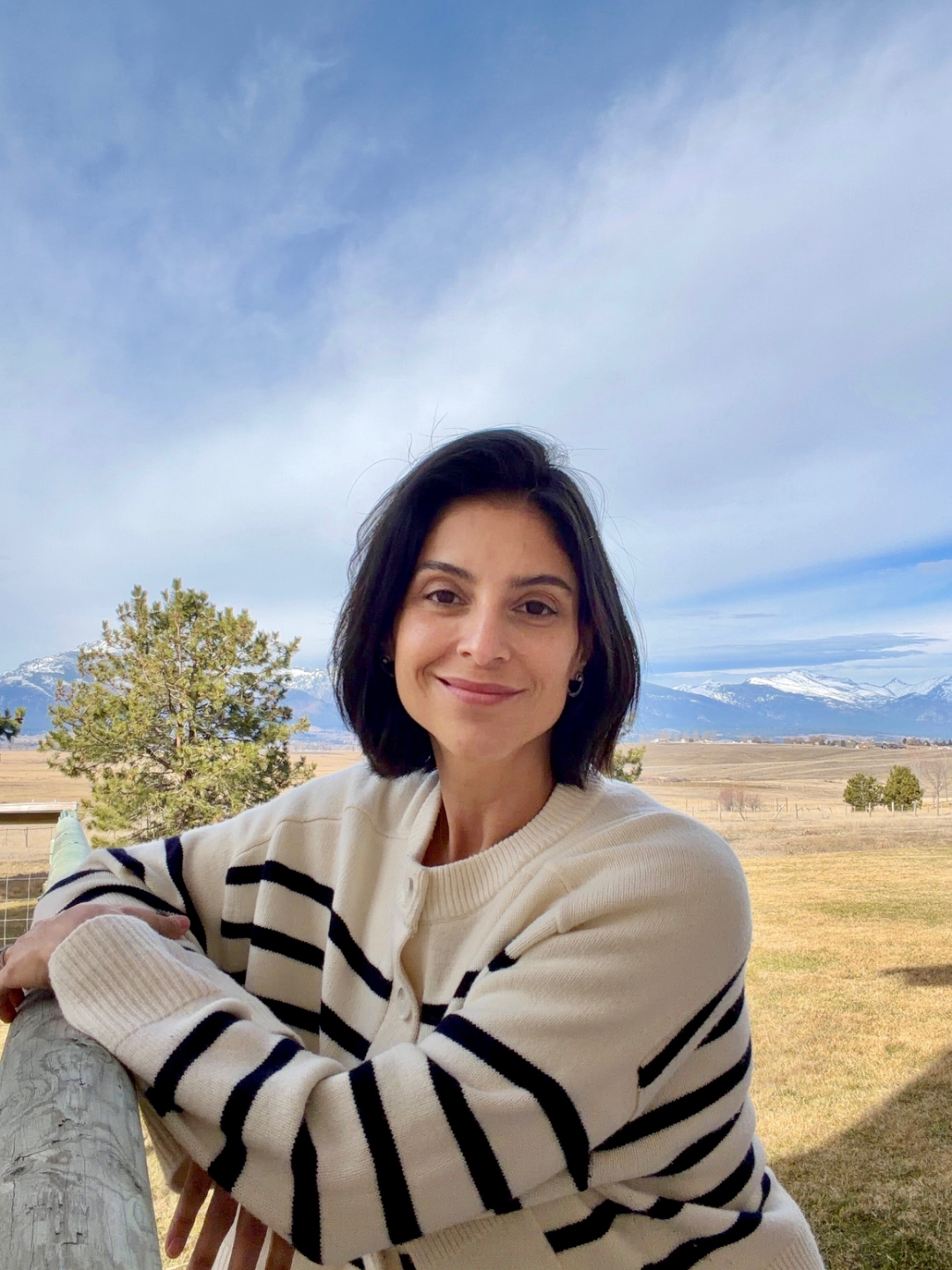
My name is Fernanda. I was fourteen when my father told me he had been living with AIDS for four years.
He had known for four years. I had not.
The stigma. The secrecy. The fear.
No one talked about it. No one could know. And no one knew how long he had left.
A year later, in 1995, I was accepted into a year-long study abroad program.
I wanted to go.
And immediately, guilt arrived.
How can you leave?
What kind of daughter chooses her own life now?
My mother saw what was happening. She gave me permission to want it.
My father called me in alone. I expected him to ask me to stay.
Instead, he said:
“I made my choices. I lived my life. Go live yours.”
I almost didn’t go. Even with permission, guilt nearly won.
But I left.
My father lived — not just that year, but for thirty more.
I am grateful I did not stop living for a death that took decades to arrive.
Two parents. Two kinds of permission.
One to want. One to take.
Those permissions became the foundation of everything that followed.
Years later, I understood what was really happening:
Guilt had been negotiating my life.
So I began studying it — not emotionally, but structurally.
Guilt renegotiates.
Permission is not a single decision.
It is a structure.
Guilt returned — in my career, in love, in motherhood, in ambition.
Not because I was wrong.
But because guilt always tries to renegotiate what has already been decided.
That’s when I understood something important:
Permission cannot rely on emotion.
It must be structural.
So I built systems — not to work more, but to protect my capacity.
Systems that let me rest without apology.
Set boundaries without defense.
Want without justification.
That is the foundation of The Soft Era.
What I Built
The Soft Era is not content. It's not inspiration. It's not a podcast you half-listen to on a walk.
It's a system you implement — and it changes how you operate.
The work is organized into two bodies:
The Path — Five frameworks for your personal life. The Energy Map, the Boundary Framework, the Rest Protocol, the Care Architecture, and the Decision Framework — built in sequence, returnable for years.
The Practice — Five frameworks for your professional life. The Capacity Protocol, the Visibility Protocol, the Ambition Map, the Earning Map, and the Opportunity Filter — for women opting out of burnout, not out of work.
→ Explore The PracticeYou don't need to become someone new. You need systems that protect who you already are. The Soft Era builds those systems. Start with The Map — it's free, and it takes less than two minutes.
→ Start with The Map (Free)